
We will be closed Saturday (1/24) - Monday (1/26) due to inclement weather.
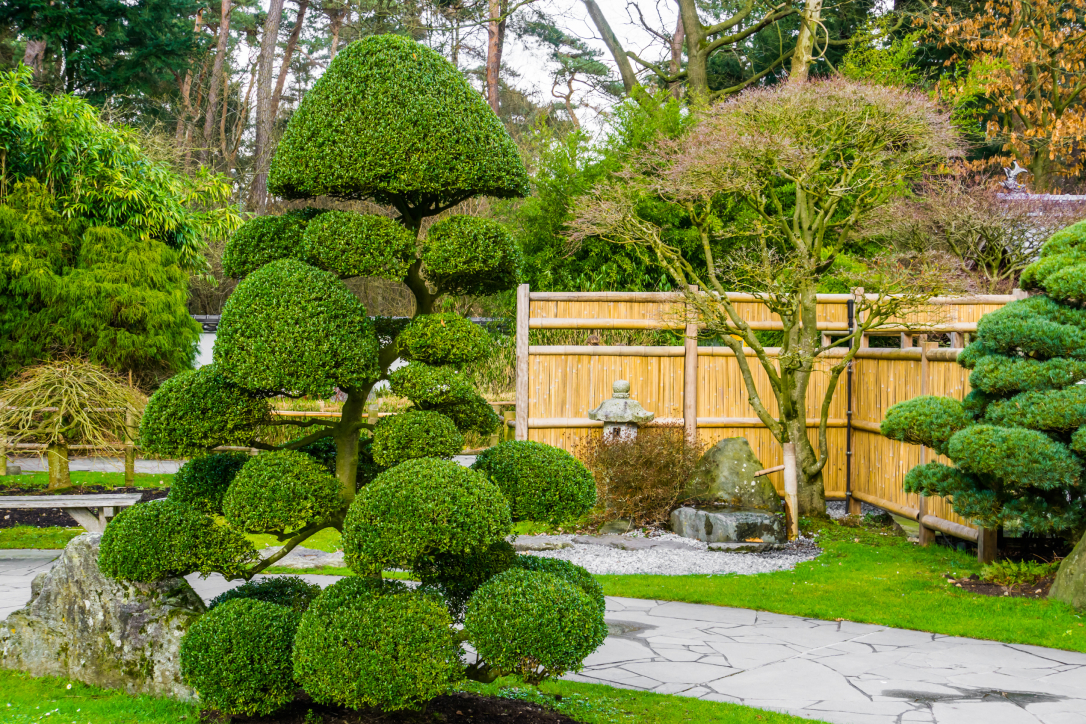
Japanese gardens are known for their elegance - but how do they achieve it? It’s a lot simpler than it looks, and that’s kind of the point. By using layers of natural texture and spacing, plantings feel intentional and serene. Clean lines, stone statues, and water features like architectural-inspired fountains add focal points and structure to your space. And no Japanese garden would be complete without a Japanese Maple or stately evergreen growing over the space. Read on for more tips to help set the tone for your new, spa-like retreat.
From hanging wisteria blossoms to the ephemeral swirls of cherry blossom petals in the spring, texture is a big part of Japanese gardens. But to truly encapsulate the vibes of a Japanese-style garden, you have to think much, much lower, because a truly great Japanese-style garden is built from the groundcover up.
In our Design 101 series, we’ve referred to shrubs and trees as the walls and furniture of the room that is your outdoor space. If that’s the case, then groundcover equates to the floor - the literal foundation of your garden. In Japanese gardens, this is a great way to build the layers of natural texture that sets them apart.
Groundcovers like moss, stonecrop, and lysimachia can quickly grow into your space to create a natural “carpet” and backdrop for your other plants. Allowing your groundcover to take over will make your garden look like it’s always been there.
You’ll want to first choose a few structural, larger trees or shrubs to anchor your garden. This will help you build everything out from these.
Japanese gardens favor evergreens and plants with restrained form over showy color. Pines (black pine, white pine, mugo pines) are classic for structure, often trained and pruned into cloud shapes. Conifers such as juniper and cypress add year-round green and interesting textures.
Japanese maples add seasonal interest with delicate leaves and fall color, while azaleas and camellias contribute controlled bursts of bloom without feeling busy.
Evergreens like Japanese holly, boxwood, and yew are typically clipped into rounded or cloud-pruned forms (karikomi) to echo the shapes of hills or rocks.
No matter which you choose, you’ll want to keep it pruned to look intentional and aged, as if it's always belonged there.
Understory and mid-ground plants in a Japanese garden fill the space between the tree canopy and ground cover, softening transitions and adding texture without competing for attention.
Ferns thrive in shaded pockets, bringing a lush, layered look. Hostas offer broad, textured leaves that contrast nicely with finer foliage nearby. Japanese forest grass (hakonechloa) cascades gracefully along paths and stone edges, its arching blades catching light and movement. Azaleas and camellias can sit at this middle layer too, providing structure and seasonal color while staying low enough not to overwhelm the trees above. Nandina (heavenly bamboo) and aucuba are also common choices, valued for their form and, in the case of nandina, its bright berries in fall and winter.
The goal at this layer is to create cohesion with plants chosen for how their shapes and textures play off one another, filling gaps naturally rather than drawing the eye on their own.
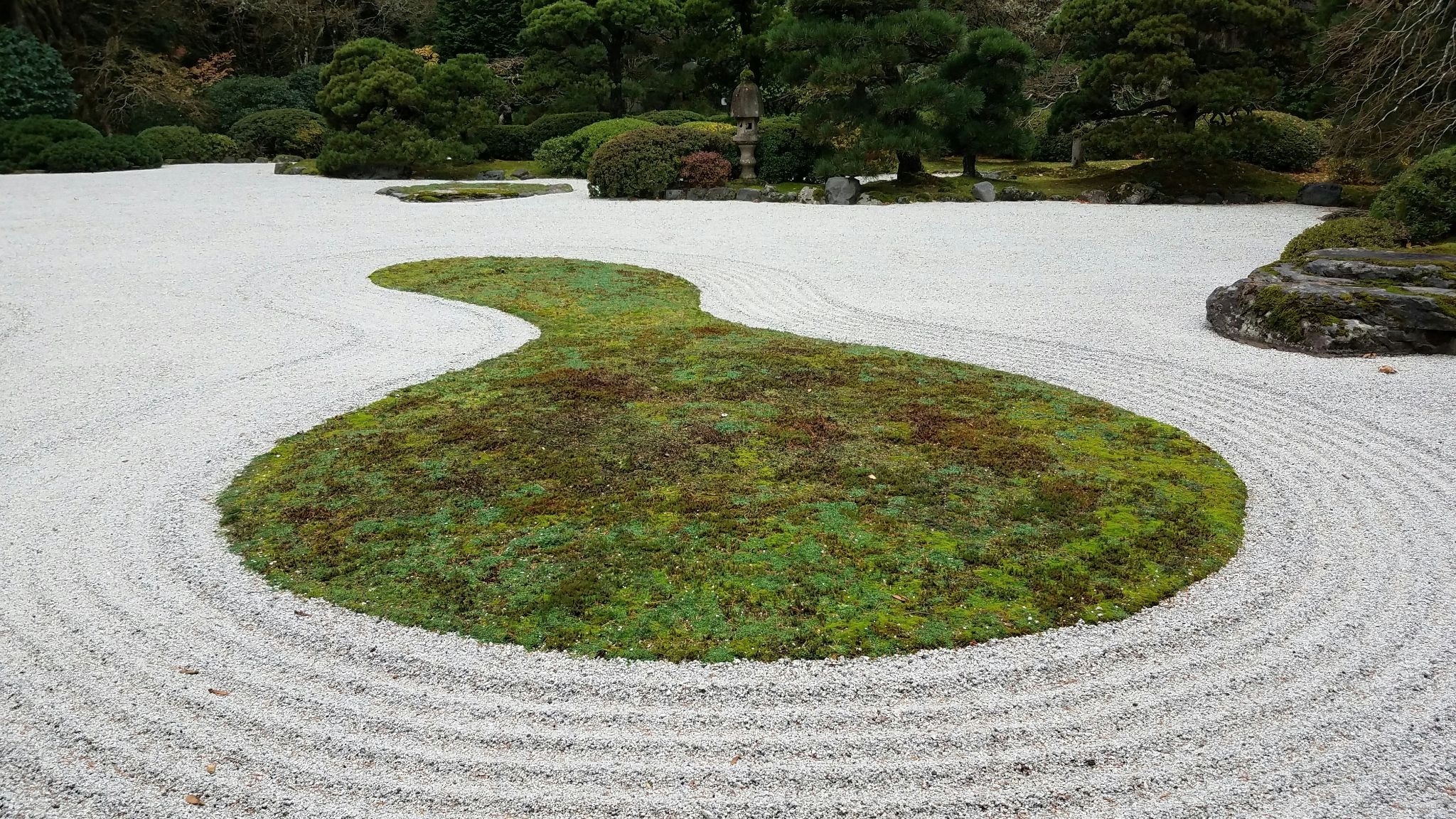
Zen gardens, complete with boulders and gravel or sand raked into rippling patterns, are a staple of the Japanese garden style, but it’s not always a practical addition. If you want the look without a full zen-garden setup, focus on incorporating the principle of clean lines that guide Japanese-style gardens. Help areas of interest flow into each other more naturally by curving the line between them, but keep edges crisp. Or, if you want a path, keep it straight and defined. High contrast gravel colors are an excellent way to capture the zen garden vibes without all the raking.
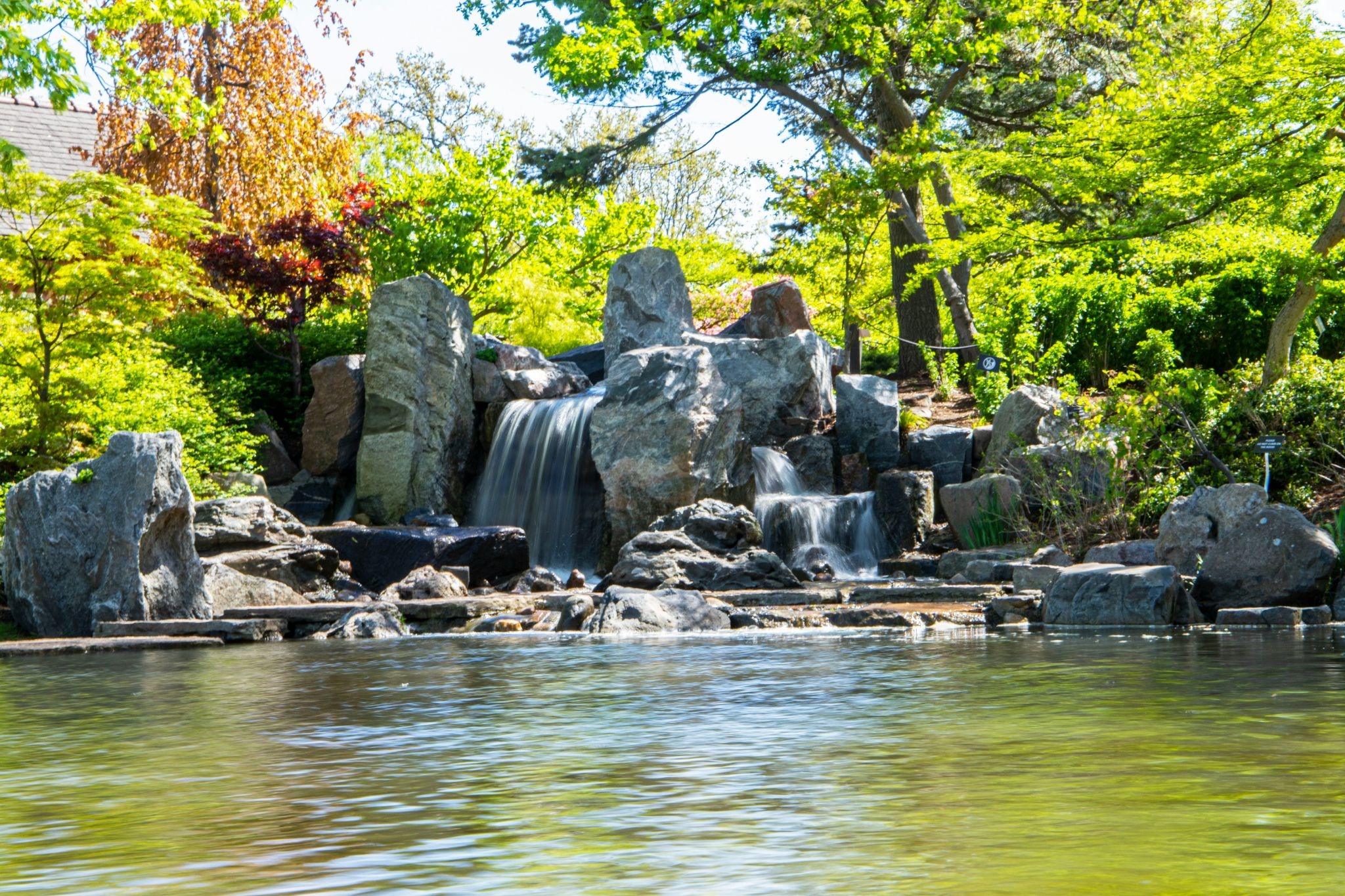
Water features, especially koi ponds, are also a staple of Japanese gardens. They add visual interest and depth by reflecting the nature surrounding them, while also enticing wildlife (or providing you the opportunity to have koi fish of your own, depending on the type of water feature you design). Waterfalls over stacked stones or flanked by rustic boulders add an auditory element to your tranquility, allowing you to meditate on the sound of flowing water.
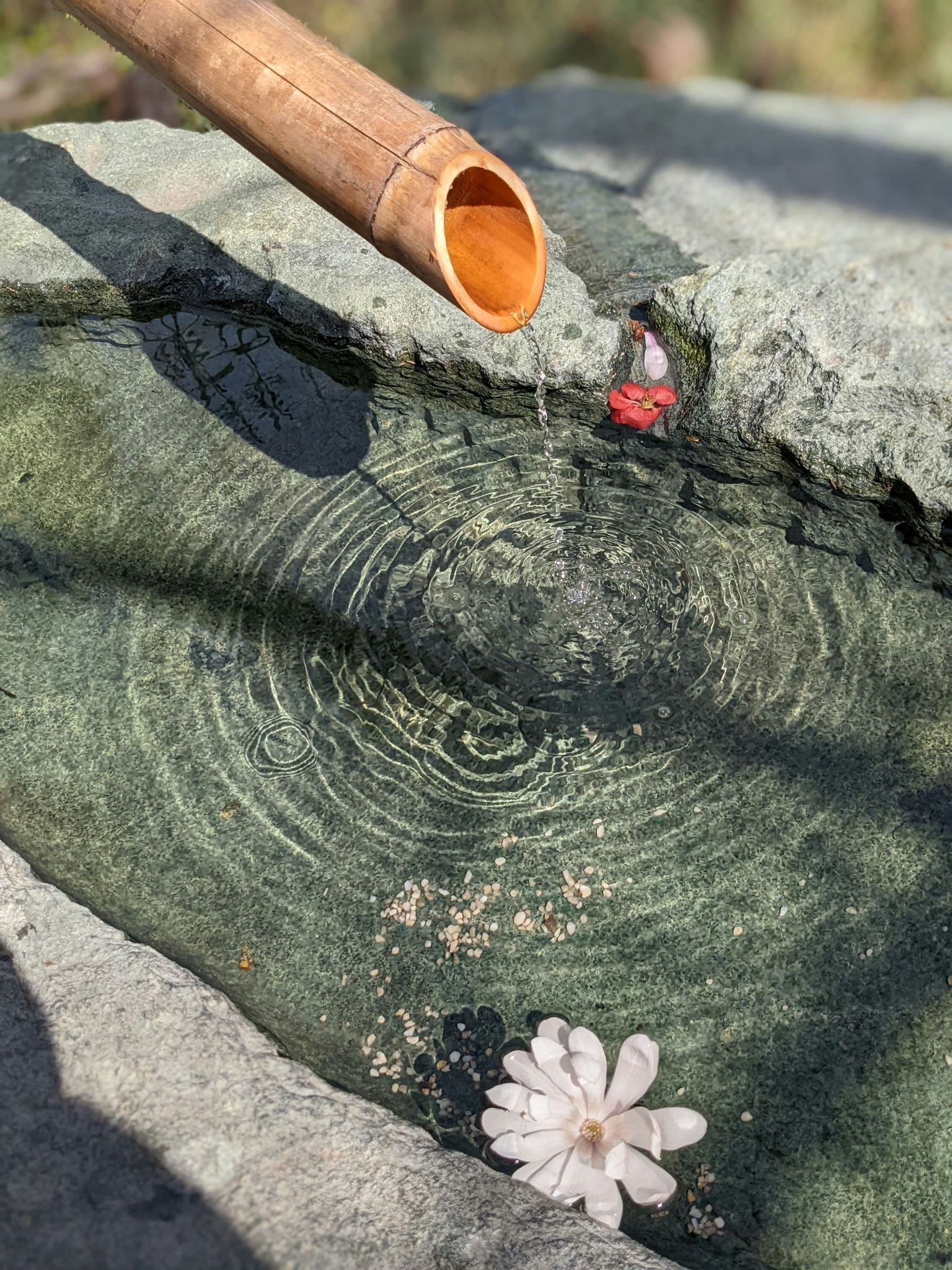
However, not everyone has space for a big pond. Get the same soothing effect with an outdoor fountain, which will add a rhythmic trickle of water to the serenity of your backyard.
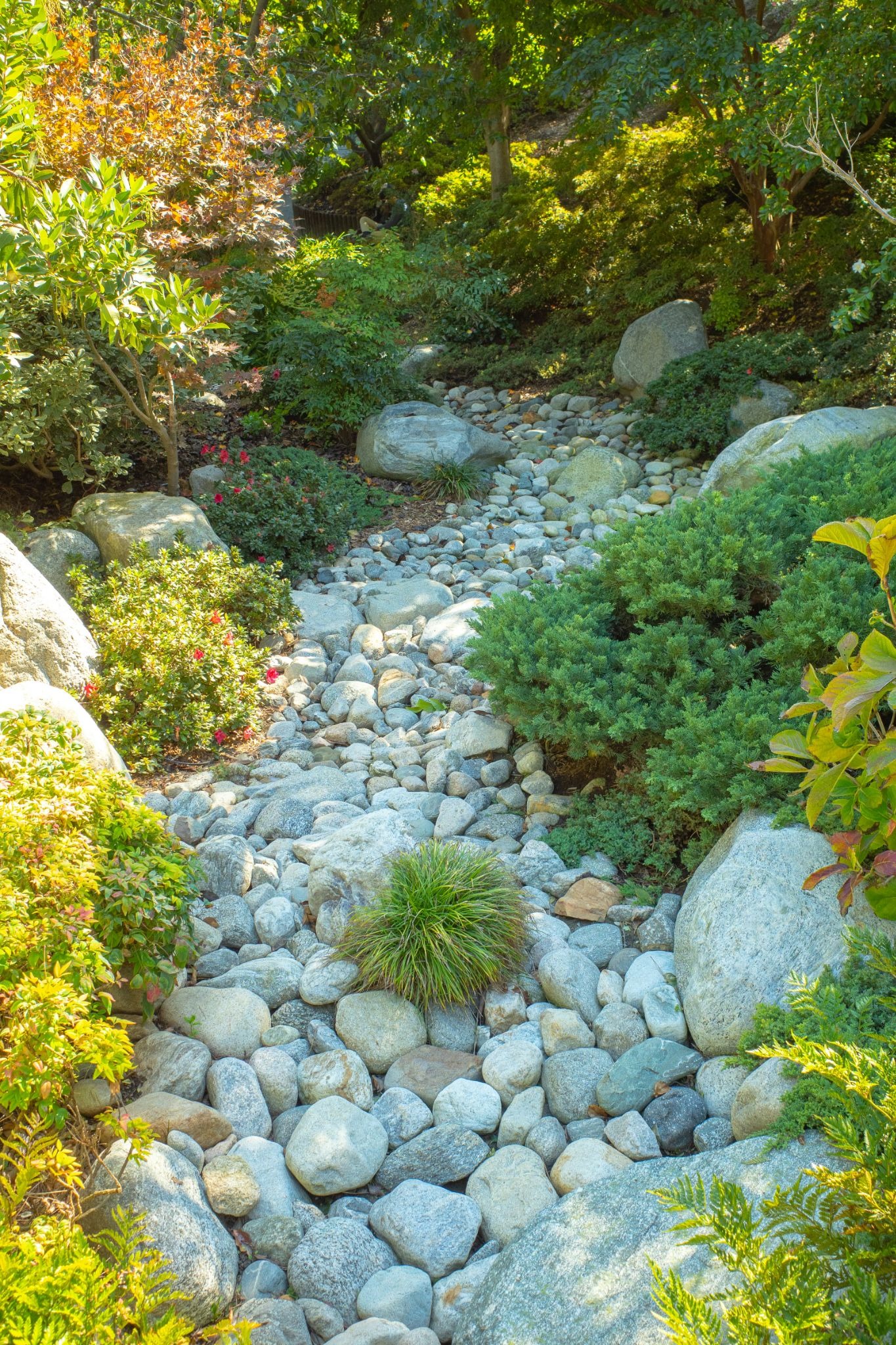
Want the look of a natural water feature, but don’t want the full-time maintenance? Adding a dry creek into your hardscaping can simulate the visual separation of spaces water features provide in Japanese gardens. Consider starting the creek near your gutter’s downspout to help funnel extra water away from your home during heavy storms. Make sure you line it with small shrubs and pick one or two smaller trees that will help anchor the gravel bed to your garden, making it feel as natural as possible.
In a Japanese garden, stones help add to the structural backbone and focal points. Carefully placed rocks (ishi) represent mountains, islands, or animals in miniature, and their arrangement follows deliberate principles of asymmetry and odd-numbered groupings to feel natural rather than staged.
Stepping stones (tobi-ishi) guide movement through the garden at a deliberately slow, contemplative pace, while larger boulders anchor views or mark transitions between spaces.
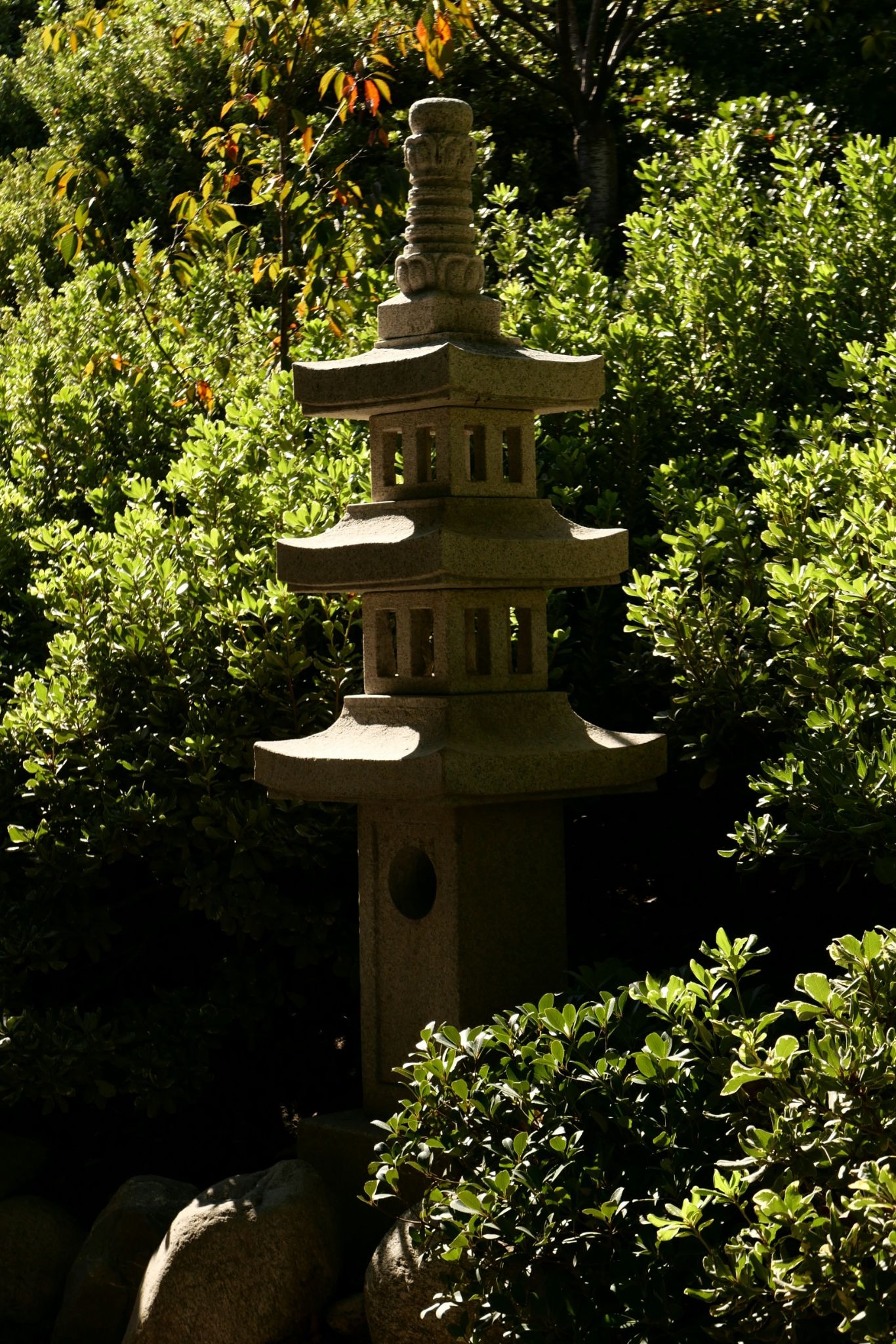
Stone lanterns (toro) and water basins (tsukubai) are the most common statuary elements, traditionally placed near paths or teahouses to mark a point of pause or ritual. Adding one or two of these elements to your garden can honor that tradition.
Bringing a Japanese-style garden to life isn't about perfection, but more about restraint. Layer your groundcover, choose a few structural trees or shrubs to anchor the space, and add in some water and stone elements. The beauty of this style is that a handful of well-chosen elements, placed with intention, can transform any backyard into a retreat that feels like it's been there for years.
Good luck in the garden!


