We will be closed Saturday (1/24) - Monday (1/26) due to inclement weather.
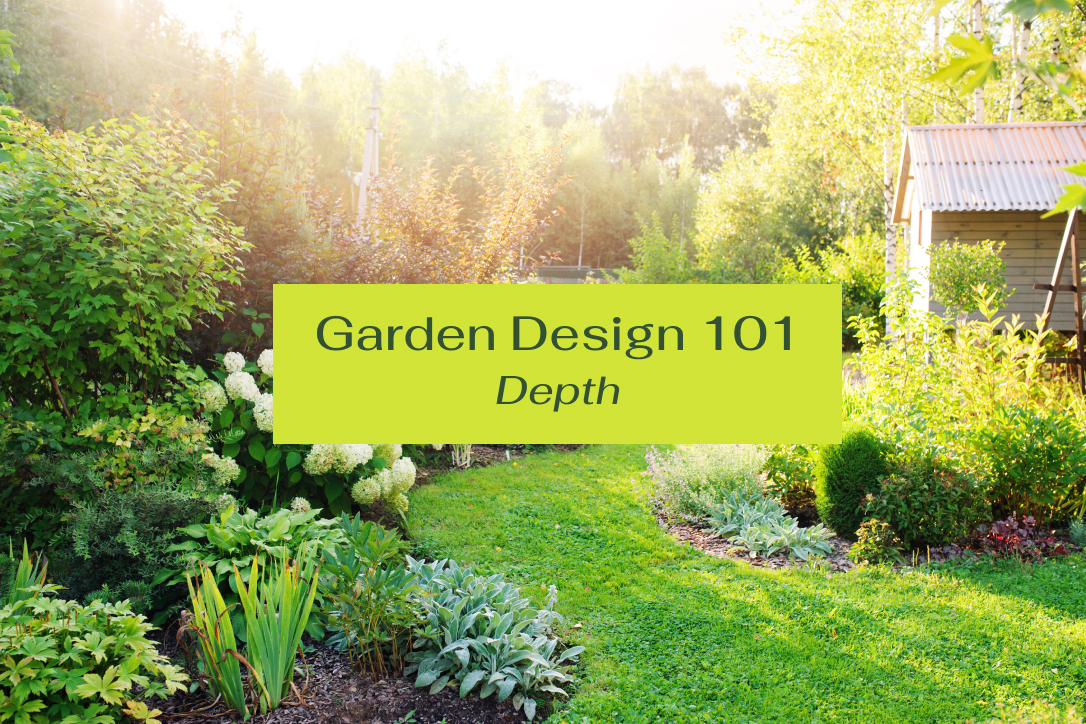
This is part one of our Garden Design 101 Series, designed to help Northwest Arkansas gardeners plan with intention and build their best gardens yet.
Spring gardening has a way of pulling us straight into plant mode. We see something blooming, fall in love, and start digging. But some of the best gardens weren’t built that way. They were planned long before the first spring weekend.
This article is part of our Garden Design 101 Series, where we’re stepping back and covering the fundamentals that make gardens feel finished, balanced, and perfect for you. Today, we’re talking about one of the most important—and most overlooked—design basics: depth.
We hear this all the time: “My plants are doing well, but the bed still doesn’t look right.”
More often than not, the issue isn’t color or plant choice—it’s depth.
A flat garden is usually planted in a single plane. Everything sits at roughly the same height, often lined up along the edge of the bed. It looks tidy at first, but it rarely holds up through the season. Once plants start to mature, there’s nothing to anchor the space.
Depth is what gives a garden a sense of place. It’s what allows your eye to move through the bed instead of stopping at the sidewalk.
One of the easiest ways to understand depth is to think in layers—much like a landscape painting.
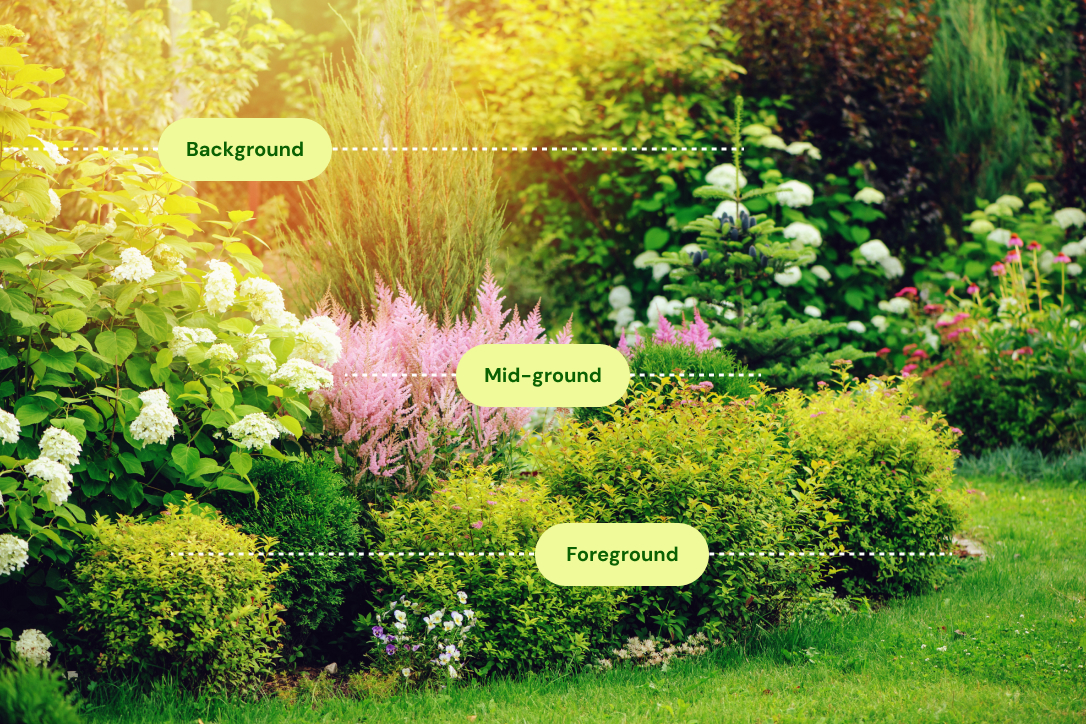
The foreground is what you encounter first. It softens the edge of the bed and invites you in. These are your lower-growing plants that spill gently toward a path or lawn, keeping the garden from feeling abrupt or unfinished.
The midground is where the garden comes to life. This layer does most of the visual work throughout the growing season. It’s where perennials are repeated, where color should show up most reliably, and where the garden begins to feel cohesive rather than cluttered.
The background provides structure. Shrubs, ornamental grasses, and taller perennials create a backdrop that holds the garden together even when nothing is in bloom. This is the layer that gives a bed its backbone.
When these layers work together, the garden feels calm and intentional. When one is missing, the whole space feels off-balance.
One of the most common design missteps we see is starting at the edge of the bed and working inward. It feels logical (after all, that’s what you see first) but it often leads to tall plants blocking shorter ones and constant rearranging.
Designing from the back forward changes everything. When you place your largest, tallest plants, trees, and shrubs first (background), the rest of the bed naturally falls into place. Mid-sized plants support them (midground), and the front edge (foreground) becomes a finishing touch rather than the main event.
This approach saves time, prevents overcrowding, and results in beds that feel settled instead of temporary.
Gardens are viewed most often from a porch, a window, or the street. Some are on slopes. Others curve around driveways or wrap along sidewalks. Depth helps guide the eye through all of those views.
Instead of hitting a wall of plants, your eye moves gradually—low to mid to tall—creating a sense of flow. On sloped lots especially, layering can prevent that stacked, stair-step look and make beds feel grounded rather than top-heavy.
A good question to ask as you plan: Where am I standing when I look at this garden most often? Depth should support that view. Go to your viewing spot and mentally mark where your eyes go naturally. These should be your focal points where you plant your largest plants or clusters.
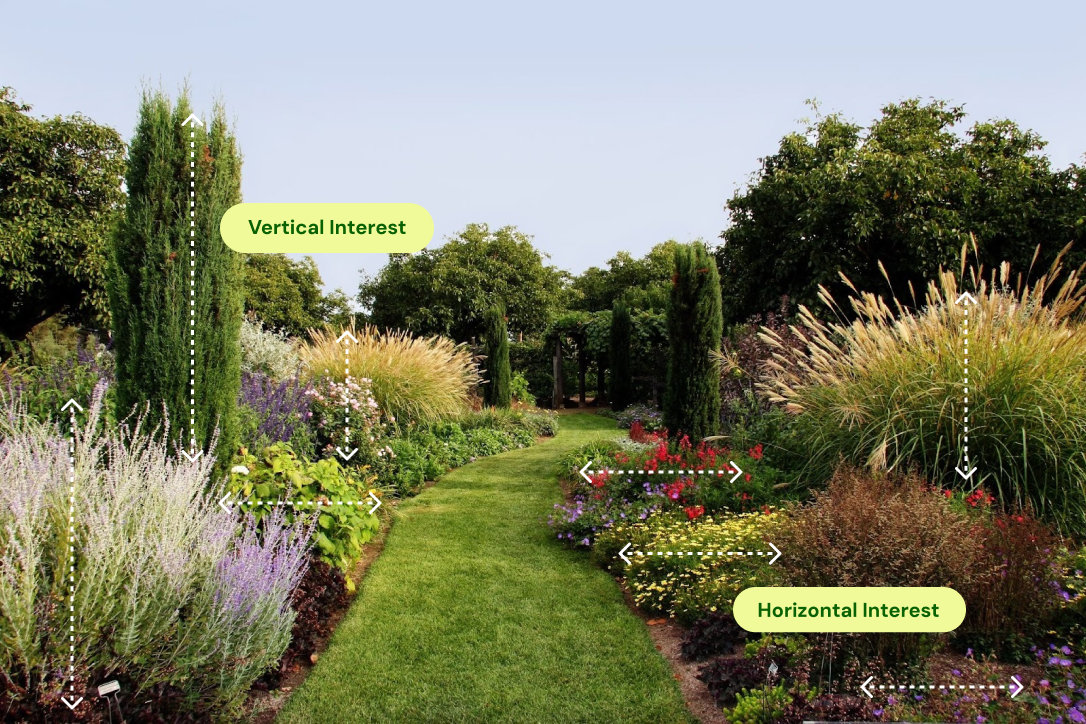
Depth isn’t just about height, it’s also about contrast.
Vertical plants draw the eye upward. They add rhythm and energy. Horizontal plants spread, soften, and slow things down. A garden full of vertical forms can feel stiff, while one made up entirely of mounding plants often feels flat.
The interplay between the two creates movement and balance. It’s subtle, but it’s one of the reasons some gardens feel easy to look at while others feel restless. You’ll want to use a mix of tall and wide plants together to create a sense of balance across the garden.
Depth isn’t just about plant height. It’s also about elevation: the subtle rise and fall that gives a garden bed dimension and keeps it from feeling flat, even when plants are young.
In many Northwest Arkansas gardens, beds are built almost level with the surrounding lawn. When everything starts at the same plane, even well-layered plants can feel compressed. Adding gentle elevation helps separate layers, improves drainage, and gives your plants room to be seen.
This doesn’t have to mean hauling in loads of soil or building retaining walls. Start by letting the back of the bed sit slightly higher than the front. Even a few inches of rise creates enough visual distinction to help taller plants stand apart from the midground. As your eye moves forward, the bed gradually steps down, allowing lower plants to naturally take their place without being overshadowed.
Curves help here too. A gently undulating bed edge creates natural pockets where plants can sit at different heights, rather than all competing at the same level. Straight, flat edges tend to flatten the entire design.
If you’re working on a slope (which is common around NWA homes) lean into it instead of fighting it. Use the natural grade to your advantage by placing structural plants where the ground naturally rises and softer, lower plants where it falls away. The slope becomes part of the design rather than something you’re trying to hide.
If your garden feels unfinished, you may have a depth problem.
Depth—clear layers, thoughtful sightlines, and a balance of vertical and horizontal forms—is what turns a collection of plants into a garden that feels intentional and complete.
In the next article in our Garden Planning 101 Series, we’ll talk about seasonality and how to plan for all-season interest.