
We will be closed Saturday (1/24) - Monday (1/26) due to inclement weather.
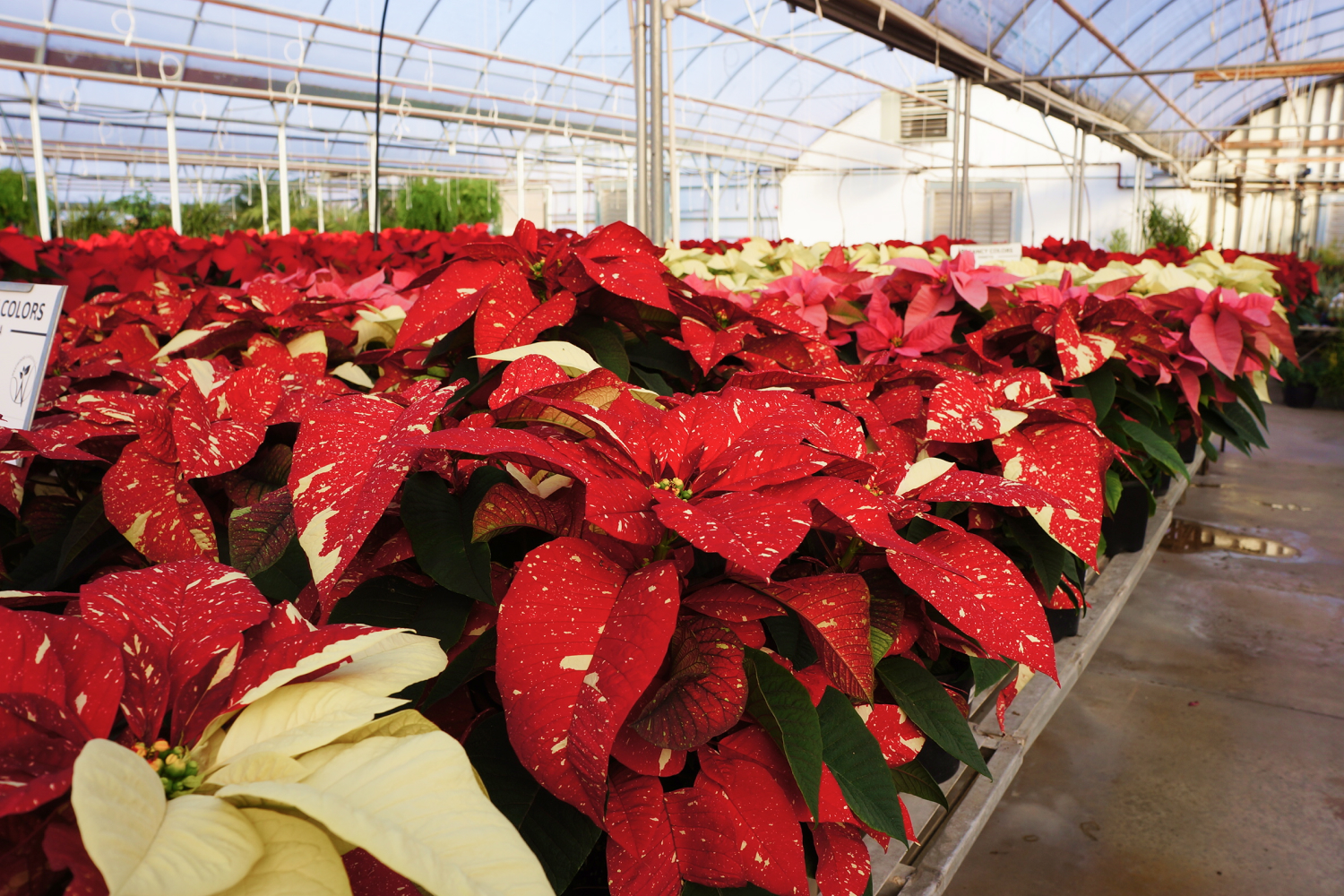
Poinsettias are the quintessential Christmas plant, but they often get a bad rap.
For many people, they’re a one-season plant. Gorgeous for a few weeks, then suddenly sad, leggy, or dropping leaves by January. But here’s the truth we’ve learned after growing thousands of poinsettias right here in Northwest Arkansas: poinsettias aren’t fussy. They’re just misunderstood.
With the right care, poinsettias can stay beautiful all winter and even live on as a healthy houseplant well beyond the holidays. Let’s break down what they actually need, why they behave the way they do, and how you can keep yours looking its best.
Poinsettias (Euphorbia pulcherrima) are tropical plants native to southern Mexico. That means a few important things right away:
Those colorful “flowers” everyone loves? They’re actually bracts, or modified leaves. The true flowers are the tiny yellow centers in the middle. Once you know that, a lot of poinsettia behavior makes more sense.

Poinsettias thrive in bright, indirect light. Think: near a sunny window, but not pressed up against cold glass or blasted by harsh afternoon sun.
A spot with morning light or filtered daylight is ideal. Too little light, and the plant stretches and drops leaves. Too much direct sun, and the bracts can fade or scorch.
This is where most poinsettias struggle.
They prefer daytime temperatures between 65–75°F and slightly cooler nights. What they don’t like are sudden changes. Cold drafts from doors, heat vents blowing directly on them, or sitting next to a chilly window can cause leaf drop almost overnight.
If you wouldn’t be comfortable sitting there for hours, your poinsettia probably isn’t either. Please: DO NOT PUT YOUR POINSETTIA OUTSIDE.
👉 Tip: Keep poinsettias away from exterior doors, fireplaces, and HVAC vents.
Overwatering is the number one poinsettia killer.
These plants like soil that’s lightly moist—but never soggy. Let the top inch of soil dry out before watering again. When you do water, water thoroughly until it drains out the bottom, then empty the saucer.
Standing water around the roots cuts off oxygen and leads to root rot...quickly...which shows up as yellowing leaves and sudden collapse.
👉 Tip: Put your poinsettia in just the nursery pot in the sink, water until it comes out the bottom holes, then place back where you had it with a saucer. But be sure to empty the saucer after an hour or so if there's any standing water.
Because poinsettias are tropical, they appreciate moderate humidity. Our winter air tends to be dry, especially indoors with heat running.
You don’t need a greenhouse setup—just avoid placing them right next to a heat source. Grouping plants together or placing the pot on a pebble tray with water can help.
👉 Good news: Normal household humidity is usually enough if everything else is right.
During the holiday season, poinsettias don’t need fertilizer. They’re not actively growing in the way houseplants do during spring and summer.
If you keep your poinsettia past winter and see new green growth starting in late spring, that’s the time to begin feeding lightly with a balanced houseplant fertilizer.
Once the colorful bracts fade and drop, many people toss the plant. But if you’re up for it, poinsettias can absolutely live on.
Here’s what to expect:
Getting a poinsettia to rebloom red for the holidays again takes very specific light control starting in early fall (long nights, every night), so we won’t pretend that’s easy. But as a leafy green houseplant? Very doable.
Plants communicate. Poinsettias are just honest about it.
When grown well, Poinsettias bring warmth and color into the darkest months of the year and remind us that even in winter, plants are still very much alive.
At Westwood, we grow our poinsettias locally, which means they’re handled with care long before they make it into your home. If you ever have questions—before or after the holidays—we’re always happy to help.
Stop by, ask questions, and enjoy your poinsettias for more than just a season.

