
We will be closed Saturday (1/24) - Monday (1/26) due to inclement weather.
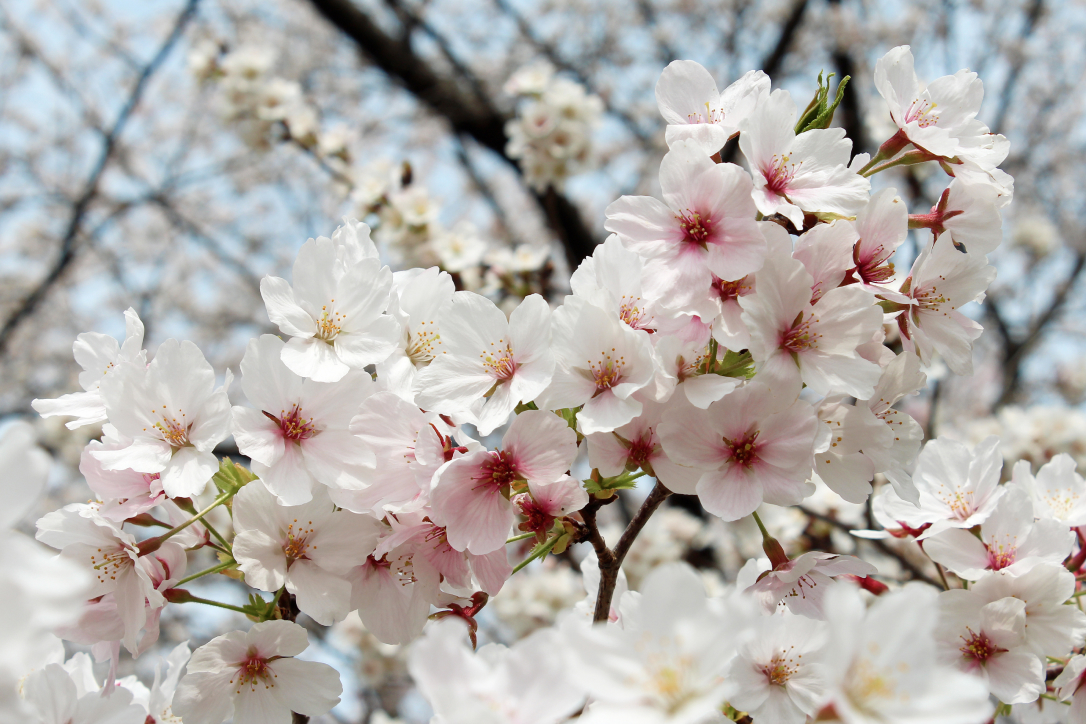
Arkansas has a way of making spring feel earned. After months of gray skies and dormant branches, the first flush of pink and white blooms hits different. And then, just when you think it's finally here, early March hands you a sucker punch: a hard freeze on the heels of weeks of warm weather.
Many spring-blooming trees across Northwest Arkansas had their buds burned by the freeze we saw after that extended warm stretch. Swollen, color-showing buds are vulnerable. Once temperatures dip below freezing after a tree has broken dormancy, those early blooms can take real damage.
It stings. We know. But here's what we also know: a hard freeze doesn't end a tree. It delays a season. The tree itself is almost certainly fine, and next spring? It'll be glorious again.
More importantly, if you've been thinking about adding a blooming tree to your yard, right now is one of the best times to plant. Your new tree goes in the ground before the summer heat hits, has time to establish roots, and comes back next spring ready to do exactly what it was bred to do.
Spring-blooming trees punch above their weight class. Most of them bloom before their leaves fully open, which means for a few weeks every year, you get a tree that's basically a giant bouquet. No leaves to compete. Just color.
But the show doesn't stop there. A well-chosen blooming tree gives you year-round interest: spring flowers, summer foliage (sometimes with striking color or texture), fall leaf color, and often interesting bark or structure in winter. A weeping cherry doesn't just bloom in March. It's a piece of living architecture in your yard every single day.
They also anchor a landscape in a way that shrubs and perennials can't. A blooming tree is a focal point. It draws the eye, frames a view, and gives the whole yard a sense of scale. Once established, most are low-maintenance and long-lived. You plant it once, and it pays dividends for decades.
Not every blooming tree performs the same way in our climate. Here's a look at the groups we carry and why we love them for this region.
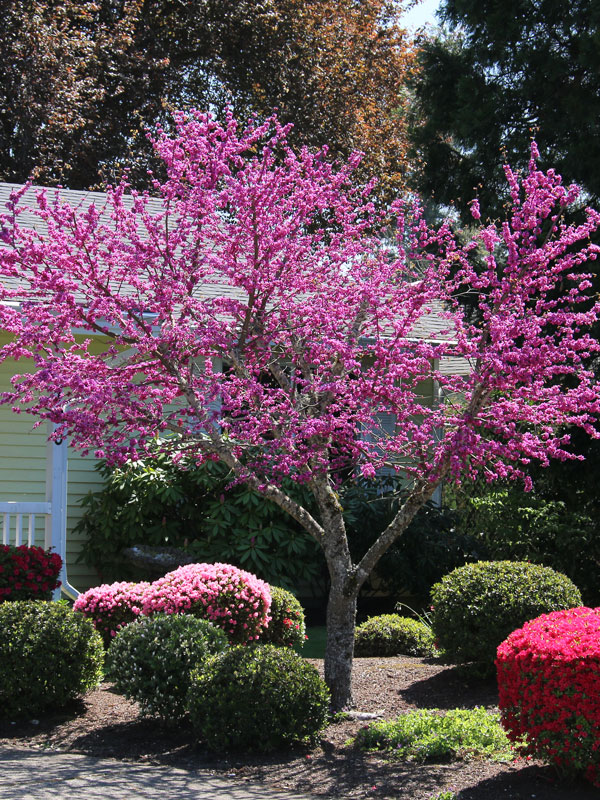
If there's one blooming tree that belongs in every Arkansas yard, it's the Eastern Redbud. It's native to this region, which means it's already adapted to our clay soils, unpredictable springs, and summer heat. It blooms in lavender-pink clusters directly on the branches and trunk, before a single leaf appears. It's one of the most striking sights in the Ozarks landscape every March.
Beyond the straight species, the redbud world has exploded with interesting varieties in recent years. You can get weeping forms, golden-leafed types, deep burgundy foliage, bi-color leaves, and compact sizes that work in smaller yards. We carry over 20 varieties this year, which tells you something about how popular they've become.
Pro tip: varieties with chartreuse or gold foliage, like Hearts of Gold or The Rising Sun, are most vibrant when planted with some afternoon shade. Full sun tends to bleach out those warm tones.
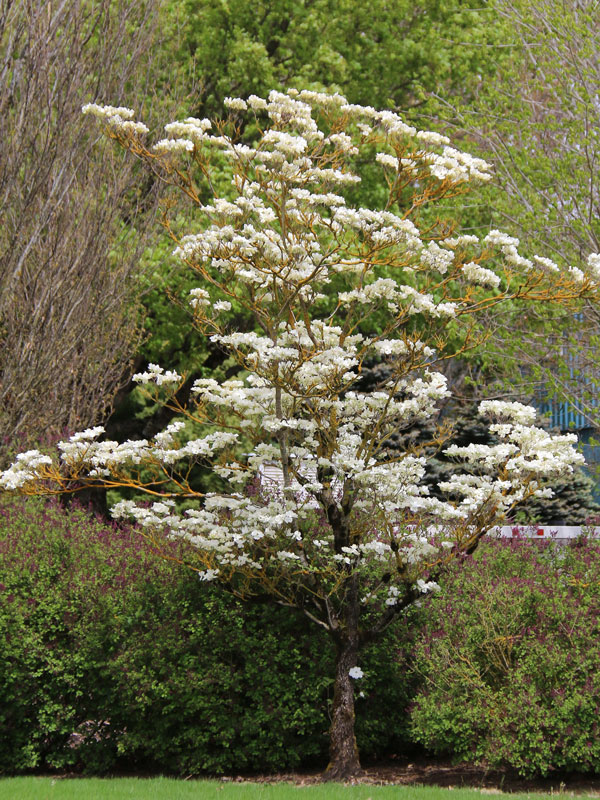
The flowering dogwood is the classic Southern bloomer. Flat, four-petal blooms (technically bracts) in white or pink cover the tree in mid-spring, followed by beautiful horizontal branching structure and brilliant red fall foliage.
We carry both native Cornus florida varieties and Kousa dogwoods, which are a Japanese species that blooms a few weeks later than native types. That later bloom time actually works in their favor in freeze years like this one. The Kousa-native hybrids, like Venus, Stellar Pink, and Celestial, split the difference: they get the large showy blooms of the Kousa and the disease resistance that's been bred into modern hybrids. They're some of our most reliable performers.
Native dogwoods prefer a spot with morning sun and afternoon shade. They're understory trees in nature, and that translates beautifully to the dappled light under larger trees in your landscape.
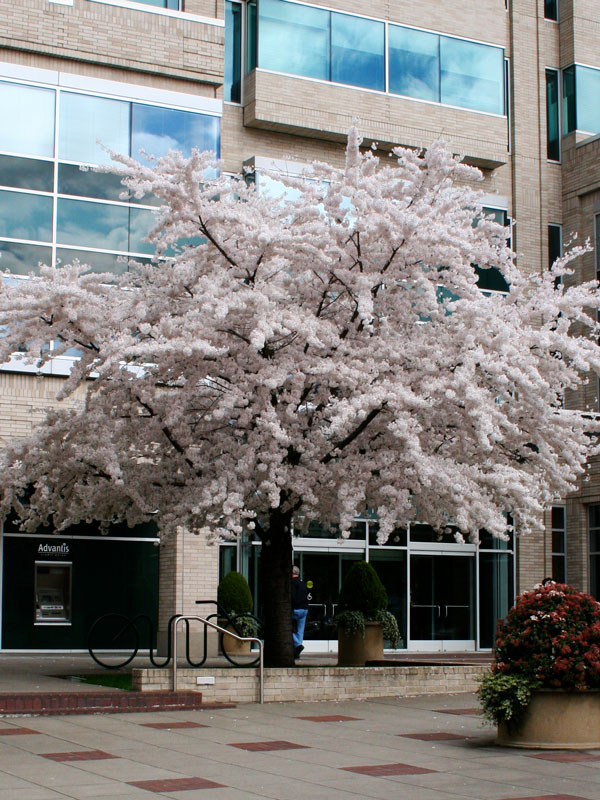
Nothing says spring quite like a cloud of cherry blossoms. Ornamental cherries bloom early and big. They're at their best when you give them a spot where you can see the whole tree from a distance, because the effect is best when you step back and take it all in.
Weeping forms like Snow Fountains and Pink Cascade make stunning specimen trees. Upright varieties like Pink Flair or Kwanzan are classics for a reason. They're one of the groups most affected by late freezes because they bloom so early, but that early bloom is also exactly what makes them so special.
Pro tip: ornamental cherries are shorter-lived than many landscape trees, often 15 to 25 years. Think of them the way you'd think of a show pony. High impact, worth every year.
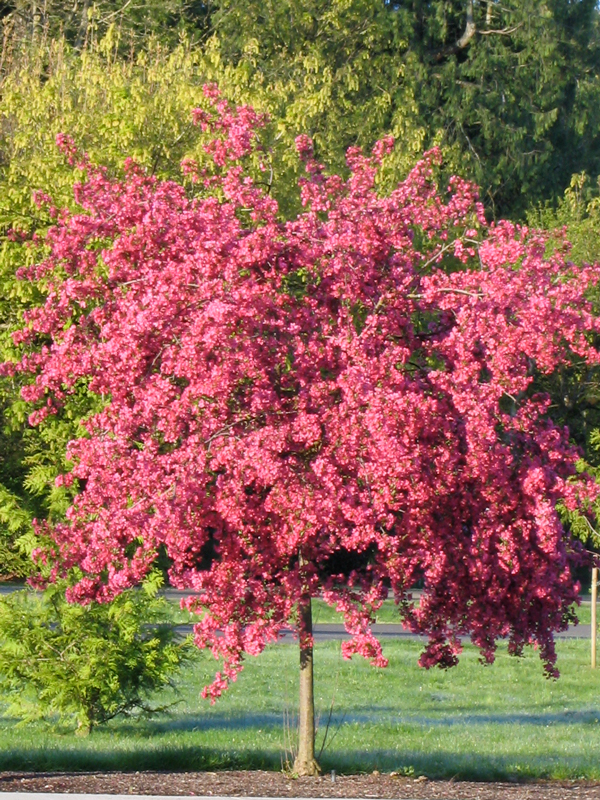
Crabapples might be the most underrated blooming tree in the nursery. They bloom in shades of white, pink, and deep rose, and unlike many bloomers, they keep earning their place all season. Persistent small fruit hangs on through fall and winter, feeding birds and adding color long after the flowers are gone.
Disease resistance has improved dramatically in crabapple breeding. Modern varieties like Prairiefire, Royal Raindrops, and Brandywine are far more resistant to the scab and fire blight that plagued older types. Full sun and good air circulation are their friends. Keep them away from tight corners and overgrown spaces.
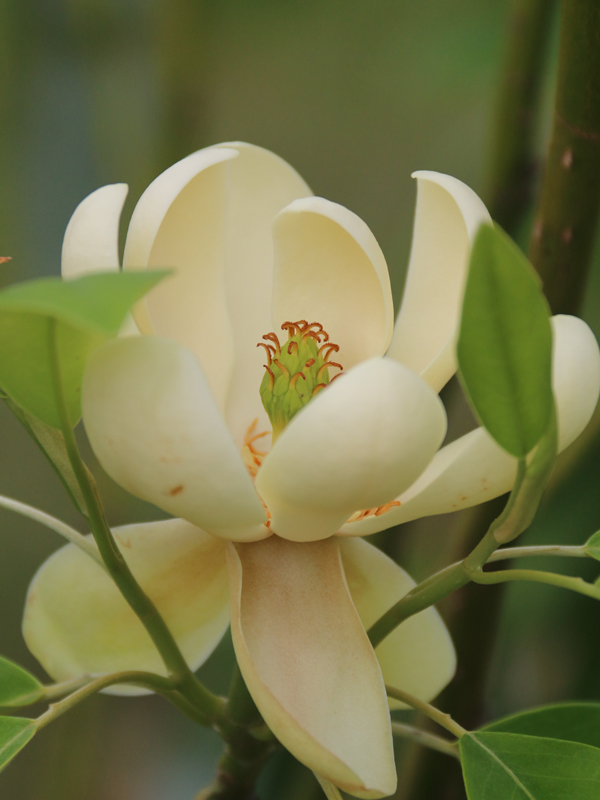
Deciduous magnolias bloom before their leaves open, producing large, showy flowers in white, pink, and deep rose. They're bold. There's nothing subtle about a Galaxy or a Rustica Rubra in full bloom. Give them room, give them a spot where you want to make a statement.
The Little Girl series, which includes Ann, Betty, and Jane, were specifically bred to bloom a bit later in spring, reducing the risk of freeze damage to their buds. They're also more compact than the larger magnolia species, making them a good fit for smaller yards.
Sweetbay magnolias bloom later in the season and hold their leaves much longer into fall. They're also more tolerant of wet feet than most deciduous magnolias, making them a good option for spots that stay a little damp.
Let's be honest about what happened. Weeks of warm weather in February and early March pushed a lot of spring-blooming trees into early bud break. Cherries, redbuds, and early magnolias in particular had already started showing color when temperatures dropped back below freezing.
Frosted buds turn brown and mushy. The blooms you were expecting may not come, or the display will be significantly reduced. That's frustrating, especially if you were counting on the show.
A few things worth knowing:
If you're planting new this year, that freeze is actually a reason to feel good about it. Trees planted now will go through a full season of root establishment before they have to face their first spring bloom cycle. That head start matters.
Spring is an excellent time to plant blooming trees, even while some are in or just past bloom. Here's how to give yours the best start:
The freeze stings, but spring comes back every year. And every year, the blooming trees in our landscapes get to do their thing again. That's the whole point of planting one. You're not buying a single season of blooms. You're buying decades of them.
If you've been thinking about adding a redbud, a dogwood, a weeping cherry, or a cloud of crabapple blossoms to your yard, come see us. Our blooming tree selection this year is some of the best we've carried. Our staff can help you pick the right variety for your space, your soil, and your timeline.

